
Surrogate Support at Every Stage: What You Actually Get With Harvest Surrogacy
Most women who contact us have already done their research. They know the compensation ranges. They have read a dozen agency websites that all promise “compassionate support.”
So the real question is never how much. It is: when something goes wrong at 11 p.m., who picks up the phone?
We have been on both sides of this process. Harvest Surrogacy was founded in 2012 by an intended parent who went through IVF and surrogacy himself — twins born in 2011 — and our team includes women who have carried for other families. That shapes how we build support: not as a promise in a brochure, but as a calendar of things that happen to you, week by week, with a named person responsible for each one. We described that philosophy in more depth in More Than a Carrier: How We Stand Beside Every Surrogate.
Here is what that actually looks like, stage by stage.
What “Surrogate Support” Really Means
Support is not a single service. It is a stack of things that have to be in place before they are needed:
- A case coordinator who knows your file and answers you directly — not a shared inbox.
- Medical coordination with the fertility clinic, so you are not the one chasing appointment confirmations.
- Legal representation that belongs to you, not to the intended parents.
- Financial administration so reimbursements do not depend on remembering to ask.
- Someone on call through the cycle, the pregnancy, and the weeks after birth.
If an agency cannot name the person who does each of these for you, the support is marketing.
Stage 1 — Before You Apply: No Cost, No Obligation
Applying costs nothing, and it does not commit you to anything. Our intake coordinators review each application within one business day, and if we have questions we contact you directly rather than leaving you in limbo.
If your situation looks like a fit, we schedule a phone consultation. This is a two-way conversation: we ask about your health history, your family, and your reasons. You ask about compensation, timelines, and what happens if you change your mind.
You can walk away at any point before signing. No fee, no pressure, no “your application expires Friday.”
Stage 2 — Screening and Medical Clearance

The medical requirements for gestational surrogacy are specific, and they are not negotiable — they exist to protect you as much as the baby, a standard shaped by ASRM guidelines. Our full breakdown of the medical requirements covers them in detail; the short version is that you generally need to be between 21 and 35, have carried at least one pregnancy to term without complications, and be in good physical and mental health.
What we do around that screening is where the difference shows:
- We schedule and coordinate the clinic appointments, including the medical records review and the fertility workup.
- We arrange the logistics — travel, accommodation, and timing — so screening does not become a second job.
- We review your insurance early, before matching, because a policy that excludes surrogacy-related care can delay everything later. Finding that out at the transfer stage is avoidable.
- We prepare you for the psychological evaluation. It is a real assessment, not a formality, and being ready for it makes the process faster.
Stage 3 — Matching: You Set the Boundaries
Matching is not an assignment. You tell us what you are comfortable with — contact level during the pregnancy, whether you want a relationship after birth, the kind of family you want to help — and we bring you profiles that fit those boundaries, not the other way around.
Before anything is agreed, you speak with the intended parents directly. You can decline a match for any reason, and declining does not affect your standing with us.
Stage 4 — Legal: Your Own Attorney, Not Ours
This is the part prospective surrogates ask about most, and the part where cheaper arrangements quietly cut corners.
In California, the surrogacy agreement is a contract that defines your rights: compensation, reimbursement, medical decision-making, what happens in a worst-case scenario. You are entitled to independent legal counsel — and this is not our policy, it is the law: California Family Code §7962(b) requires that a surrogate and the intended parents be represented by separate, independent licensed attorneys before the agreement is signed. We help you get connected with experienced reproductive law attorneys and coordinate the timeline.
Two things follow from that statute, and both protect you: your attorney reviews the agreement before you sign anything, and under §7962(d) no embryo transfer — not even the injectable medications that prepare for one — may begin until the agreement is fully executed. Never let anyone rush you past either checkpoint. If an agency pushes you, that is your signal to leave.
Stage 5 — The Medical Cycle
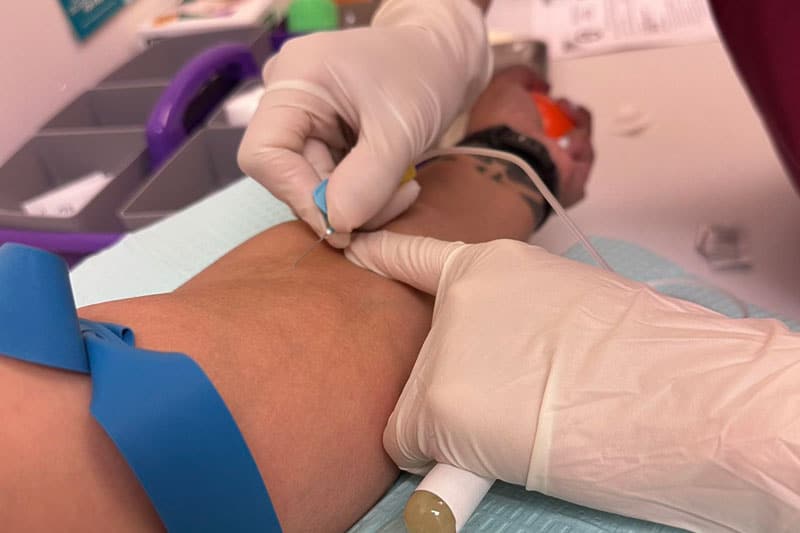
Once the contract is signed, the cycle begins — and the calendar gets dense. Medications, monitoring appointments, lining checks, travel for the transfer, then the two-week wait.
What we handle during this window:
- Medication and monitoring schedules explained in plain language, and a person to call when a pharmacy, dose, or appointment gets confusing.
- Coordination with the clinic on your behalf, including records and results.
- Travel and local logistics for the transfer, with reimbursement for mileage and related costs.
- A direct line to your coordinator — if you are spotting at midnight and cannot tell whether it is normal, you should not be waiting until Monday to ask.
Stage 6 — Pregnancy Support
Pregnancy is the longest stage, and it is where “support” either becomes concrete or disappears.
We stay involved through:
- Appointment coordination with your OB and the fertility clinic, including sending records where they need to go.
- Reimbursements that do not require chasing — mileage, copays, and approved expenses, submitted on a schedule you can predict.
- Practical allowances built into the package: maternity clothing, and childcare reimbursement for appointments and recovery days.
- Lost-wage reimbursement for time taken off work for monitoring, transfer, and delivery.
- Emotional check-ins from a team that includes women who have carried. This is not a script. They know which weeks are hard and why. If you ever want to hear it from surrogates themselves, communities like RESOLVE are a good complement to the support we provide one-on-one.
Stage 7 — Birth and Postpartum

Delivery day is the part agencies photograph for their website and the part where follow-through matters most.
We coordinate with the hospital on your behalf, make sure your support person is arranged, and stay in contact through the delivery. Afterward, we continue checking in — through recovery, through the emotional weeks that follow handing the baby to their parents, and through the period when most agencies have already marked the file closed.
That relationship does not expire on a fixed date. If you need to talk in month six, you call the same people. And many women find the experience meaningful enough to do it again — Jackie carried for a family three times, and her story is worth reading before you decide anything.
What You’re Paid — and What’s Covered on Top
Our surrogates can earn up to $90,000, plus a $1,000 sign-on bonus. Base compensation is only part of the picture — the package also includes a clothing allowance, childcare reimbursement, and other approved expense coverage.
What matters as much as the number is how it is administered: a clear schedule, a named contact for financial questions, and reimbursements that arrive without a follow-up email from you. Before you sign, ask every agency to put the full compensation schedule in writing — base fee, allowances, reimbursements, and what is not covered.
Questions Surrogates Ask Us Most
Do I need previous pregnancies?
Yes. Carrying at least one pregnancy to term without complications is a core requirement. You also need to be between 21 and 35 and in good health.
Is there any cost to me?
No. Applying, screening, legal representation, and medical care related to the surrogacy are covered by the intended parents.
Can I change my mind?
You can withdraw before signing the agreement. After signing, the contract and California law define the terms — which is exactly why your own attorney reviews it first.
Will I have a say in who I carry for?
Yes. You set your boundaries before matching, you meet the intended parents, and you can decline a match.
What if the pregnancy is difficult or I need help after birth?
Your coordinator stays in contact through recovery and beyond. Support after delivery is part of the service, not a courtesy.
Ready to Talk?
If you are considering surrogacy, the first conversation should cost you nothing and commit you to nothing. Tell us a little about yourself and our intake team will follow up within one business day.
You can also read what other surrogates have said about working with us, or review the full process and requirements before you apply.
Harvest Surrogacy — a California surrogacy agency founded in 2012 by intended parents, for intended parents and the women who help them.