
How Long Does It Take to Become a Surrogate? A Realistic 14–24 Month Timeline
Nobody warns you that the waiting is the work.
Ask a surrogate where the time went and she will not say "the pregnancy." She will say the six weeks waiting for a clinic to call back. The month her intended parents' contract sat with a lawyer in another time zone. The ten days after transfer when she did nothing but notice every twinge.
So when women ask us how long it takes to become a surrogate, we do not give a single number. A first-time surrogate in California should plan on 18 to 18 months from application to final payment. A surrogate who has done this before typically lands between 14 and 18 months. The pregnancy itself is only nine of those months — the rest is screening, matching, legal work and scheduling, and that is where the honest answers live.
Here is every phase, how long it actually runs, and what makes it stretch.
The Whole Timeline at a Glance
| Phase | What happens | Typical duration | Months from application |
|---|---|---|---|
| 1. Application & intake | Form, health history, first call with a coordinator | 1–3 weeks | Month 0 |
| 2. Records, labs & psychological evaluation | OB/GYN records, bloodwork, psych eval — you and your partner | 3–6 weeks | Month 0–2 |
| 3. Matching | Profile review, video call, mutual yes | 1–4 months | Month 2–6 |
| 4. Medical clearance | Clinic visit, uterine evaluation, infectious disease panel | 3–6 weeks | Month 3–7 |
| 5. Legal | Your own attorney, gestational carrier agreement, escrow funded | 4–8 weeks | Month 4–8 |
| 6. Medications, monitoring & transfer | Cycle calendar, injections, lining checks, embryo transfer | 4–6 weeks | Month 5–9 |
| 7. Confirmation | Beta hCG, then a 6–7 week ultrasound for heartbeat | 2–3 weeks | Month 6–10 |
| 8. Pregnancy & birth | Prenatal care, delivery | 9–10 months | Month 7–19 |
| 9. Postpartum & final payment | Recovery, final disbursement, records closed | 4–8 weeks | Month 8–21 |
The ranges overlap on purpose. Phases 4 and 5 usually run in parallel, and a fast match can pull everything forward by two months. A single failed transfer pushes it back by roughly the same amount.
Phase 1
Application and Intake Screening (Weeks 0–3)

This is the fastest phase and the one most within your control. You fill out an application, a coordinator reads your health history, and you get on a call to talk through why you want to carry for another family.
What we are checking at this stage is not whether you are "good enough." It is whether the basics line up with California requirements — age, pregnancy history, health status, stable housing, and support at home. If something does not line up, we tell you in week two rather than month four. Being turned down early is far kinder than being turned down after you have told your family.
Our surrogate requirements in California page lists the full criteria, including the age window we work within.
Phase 2
Records, Labs and the Psychological Evaluation (Weeks 3–8)
Now the paperwork starts, and it is the part nobody prepares you for. We request your obstetrical records from every delivery — sometimes from hospitals that have since changed records systems. You complete bloodwork and an infectious disease panel. You and your partner, if you have one, sit with a licensed mental health professional.
The psychological evaluation is not a test you can fail. It exists because a surrogate journey involves handing a baby to someone else, and everyone involved deserves to know that decision has been thought all the way through — including how your own children will understand it.
This phase runs three to six weeks in most cases. It runs longer when records are slow to arrive, which is the single most common reason a start date slips before matching even begins. The evaluation itself follows the framework the American Society for Reproductive Medicine sets for gestational carriers — a structured interview, not a personality test.
Phase 3
Matching (1–4 Months)

This is the longest variable in the entire journey, and the one no agency can promise you. Your profile goes to intended parents whose preferences align with yours — geography, communication style, openness about contact after birth. You see their profile first. If you are interested, we set up a video call. If both sides say yes, you are matched.
For a first-time surrogate, plan on one to four months. Experienced surrogates match faster because intended parents actively look for someone who has done it before. If you have a narrow preference on location or contact after birth, expect the longer end of that range — not because anything is wrong, but because fit takes time.
What you can do during this window: nothing, and that is genuinely the hardest advice to follow. Matching is driven by intended parent demand in your state, not by how ready you are.
Phase 4
Medical Clearance at the Clinic (3–6 Weeks)

Your intended parents' fertility clinic now takes over. You attend a screening visit: a uterine evaluation, a full lab panel, and a review of your pregnancy history by a reproductive endocrinologist. Some clinics also require a saline sonogram or a hysteroscopy. If the clinic is not near you, travel and lodging are covered under your agreement.
Three to six weeks is typical. What stretches it: clinic scheduling (good clinics book weeks out), a lab value that needs rechecking, or a clinic that wants an additional test before clearing you. What does not stretch it: your age, your BMI within the accepted range, or having had a prior C-section — those are evaluated case by case, not automatically disqualifying.
If you want the clinical detail behind this phase, our reproductive endocrinologist walks through the medical screening in detail, and our team covers the conditions that can disqualify an applicant.
Phase 5
Legal: Your Own Attorney, One Contract (4–8 Weeks)
Before a single medication is drawn up, a contract exists. California requires independent legal representation for both sides — your attorney represents only you, and the intended parents pay for that representation. This is one of the reasons California is the state most intended parents ask for by name.
The agreement covers compensation and disbursement schedule, expense reimbursement, medical decision-making, termination provisions, contact expectations after birth, and what happens if a transfer fails. Read it twice. Ask your attorney about the clause you do not understand — that is what they are paid for.
While the contract is being negotiated, the intended parents fund an escrow account. Money is released to you by milestone, never hand to hand. Four to eight weeks is normal; a straightforward California agreement with both parties responsive can close in three.
Phase 6
Medications, Monitoring and Transfer Day (4–6 Weeks)

Your cycle is synchronized with the embryo's timeline. That means estrogen to build a lining, progesterone to hold it, and monitoring appointments every few days — bloodwork and ultrasound, usually at a clinic near your home rather than the transfer clinic. Most surrogates do a "mock cycle" first to confirm their body responds the way the protocol assumes.
Then transfer day: a short procedure, no anesthesia in most cases, and about an hour of recovery before you go home. Four to six weeks covers the calendar from first injection to transfer. If your body needs a different protocol, or the clinic adjusts your lining medication, add a week or two.
Phase 7
The Wait, and the Heartbeat (2–7 Weeks)
Ten to twelve days after transfer, a blood test measures beta hCG. If it is positive, the number is repeated 48 hours later to confirm it is doubling. Then an ultrasound at six to seven weeks looks for a heartbeat.
Two things matter here. First, a negative beta is not the end of your journey — the contract spells out what happens next, and a second transfer is common. Second, a heartbeat is the milestone that starts your monthly base compensation in most agreements, which is why this phase carries emotional and financial weight at the same time. For context on how often a single transfer succeeds nationally, the CDC's ART data publishes success rates by clinic and by age.
If the first transfer does not take, plan on roughly two to three extra months: a cycle to reset, a new calendar, a second transfer. That single variable explains why two journeys with identical start dates finish four months apart.
Phase 8
Pregnancy and Birth (9–10 Months)
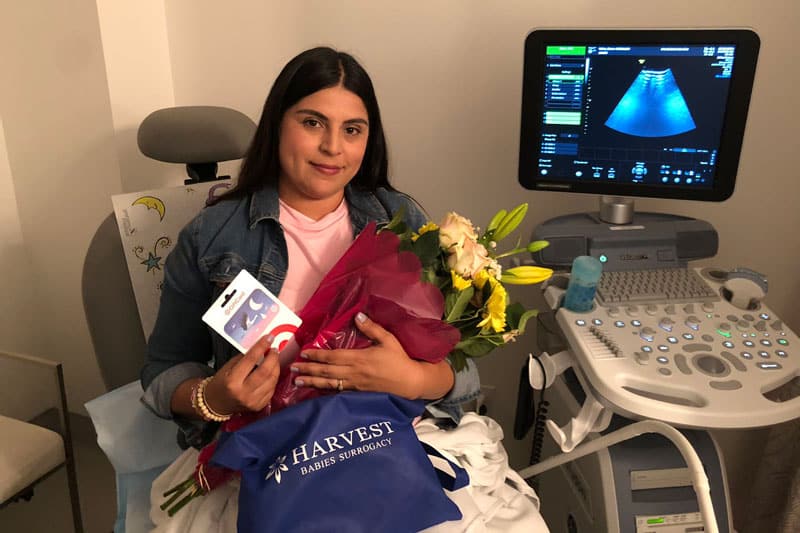
Around ten weeks you transition from the fertility clinic to your own OB, and the journey becomes an ordinary pregnancy with an extraordinary amount of coordination behind it. Prenatal appointments, monthly reports to the intended parents if that is what your agreement specifies, and a birth plan built with the hospital in advance.
California's pre-birth order means the legal work is already done when you arrive at the hospital. You are not signing away parental rights in a recovery room. Your name is on the medical record as the delivering patient; the intended parents' names are on the parentage order.
Nine to ten months, with the usual caveats — twins deliver earlier, and a scheduled C-section can move the date by weeks.
Phase 9
Postpartum and Final Payment (4–8 Weeks)

Your monthly allowance typically continues for four to six weeks after delivery to cover recovery. Final compensation, any C-section or multiples bonus, and reimbursed expenses are disbursed from escrow. Records close. If you agreed to pump, that arrangement runs on its own schedule.
Most surrogates describe this stretch as quiet, and slightly disorienting — a year of structure ending at once. Our coordinators stay in contact through it, which is part of the support that runs alongside every phase.
What Actually Delays a Journey — and What Doesn't
After enough journeys, the delays become predictable. They are almost never medical.
What adds time
Matching. One to four months, driven by intended parent demand and how specific your preferences are. This is the biggest single variable in the entire process.
A failed transfer. Two to three months, sometimes more if the clinic changes protocol.
Records that arrive slowly. Prior delivery hospitals are the usual culprit. Request your own records early and you can cut weeks.
Clinic scheduling. Good clinics book screening visits and transfer dates weeks out. Nothing you can do except be ready when a slot opens.
Legal complexity. International intended parents, or a contract that needs renegotiation, can add two to four weeks.
What does not add time
A prior C-section, a BMI at the upper end of the accepted range, or being over 30 — none of these automatically disqualify you or delay a start date. They are reviewed individually by the clinic. What actually stops a journey early is a health history the clinic cannot clear, and we screen for that in phase one so you do not lose months finding out.
First Time vs. Second Time: The Four-to-Six Month Difference
An experienced surrogate typically finishes four to six months faster, and the reasons are unglamorous. Your records are already assembled. Your psychological baseline exists. Clinics clear a returning surrogate with less back-and-forth. And intended parents actively prefer someone who has done it, so matching moves faster.
If you are considering a second journey, the realistic planning number is 14 to 18 months — still not fast, but meaningfully shorter than your first.
Where the Money Lands on the Calendar
Compensation is not paid as a lump sum, and knowing the schedule removes a lot of anxiety during the slow phases. In a typical California agreement:
| Milestone | Typical timing | What is paid |
|---|---|---|
| Contract signed, escrow funded | Month 4–8 | Sign-on or start allowance |
| Medical clearance | Month 4–8 | Screening or clearance fee |
| Each embryo transfer | Month 6–10 | Transfer fee, per attempt |
| Confirmed heartbeat | Month 7–10 | Monthly base compensation begins |
| Throughout pregnancy | Monthly | Base compensation plus monthly allowance |
| Delivery | Month 17–20 | Final base payment, C-section or multiples bonus |
| Postpartum close-out | 4–8 weeks after birth | Remaining reimbursements, allowance tail |
For the full picture of what each line is worth — base fee, allowances, reimbursements — see what the base fee and allowances actually add up to.
One honest number before you apply. If you need this to happen in six months, no agency can deliver that, and any agency that promises it is telling you something about how they operate.
If you can plan for eighteen months and want a coordinator who tells you the truth about each phase — including the boring ones — talk to our intake team. The first conversation costs you twenty minutes and nothing else.
Frequently Asked Questions
How long does it take to become a surrogate for the first time?
Plan on 18 to 24 months from application to final payment. That includes three to six weeks of screening, one to four months of matching, four to eight weeks of legal work, and a nine-to-ten-month pregnancy. The pregnancy is the shortest predictable part.
Can I speed up the process?
Only at the edges. Requesting your own obstetrical records early can save two to three weeks. Being flexible on intended parent location and contact preferences shortens matching. Everything else — clinic scheduling, legal review, whether a transfer takes — runs on someone else's clock.
What happens if the first embryo transfer doesn't work?
Your contract specifies it, and a second transfer is common. Expect roughly two to three additional months for a reset cycle, a new calendar and a new transfer. Your transfer fee is typically paid per attempt, so a failed transfer is not unpaid work.
Do I have to travel during the journey?
Most monitoring happens at a clinic near your home. You travel to the intended parents' fertility clinic for the screening visit and for transfer day, and travel costs are reimbursed under your agreement. Long-distance matches are common and manageable.
How long after delivery am I finished?
Four to eight weeks. Your monthly allowance usually continues four to six weeks post-delivery, final compensation and any bonuses are disbursed from escrow, and records are closed. Parentage is already settled in California before birth, so there is no courtroom step waiting for you afterward.
Can I keep working a full-time job?
Yes, and most surrogates do. Monitoring appointments are scheduled early and are brief, and your agreement covers lost wages for appointments, bed rest and recovery. The phases that require real time off are transfer day and delivery.
Harvest Surrogacy works with gestational carriers across California. Timing varies by clinic, match and medical history — the ranges above reflect typical journeys, not a guarantee. For how we work with intended parents, see our program overview.